

Bare Root Trees (pre-order)
Bare Root Trees (pre-order)
***THIS IS A PRE-ORDER!***
Local Pickup Only! We will contact you with the phone or email you provide at checkout! Estimated Arrival Date is Second week of April!
Couldn't load pickup availability
Out of stock
Expected Date is around second week of April. We will contact you when they are here!
Want to improve your deer habitat? We're taking orders for spring bare root trees that are great for attracting and supporting wildlife. Get yours now!
Eastern White Pine
Fast growing 90 to 100 feet. Spread 25 to 40 feet. A five needled pine, with soft, light green-blue needles, 4 inches long. Can tolerate dry, rocky soil. Grows in normal moisture conditions but can tolerate wet, swampy areas. Excellent ornamental tree for specimens, naturalizing, windbreak or dense screen. Can be easily restrained to manageable height by pruning. For screen or Christmas trees, shear when new growth appears. It is easily controlled, and is good for small properties as well as field plantings. Also widely used for Christmas trees and timber.
Norway Spruce
Fast growth to 75 or 80 feet in height. Spread 35 to 40 feet. Dense, dark green needles never get longer than 1 inch. Thrives well in average soil conditions, but prefers moisture in the soil to maintain its deep green color. Highly valued ornamental and timber tree. One of the best conifers for shelters and windbreaks, as its branches grow densely into one another. For planting a windbreak, these trees should be planted 6 feet apart. Branches droop gracefully as tree matures, making this a very attractive ornamental.
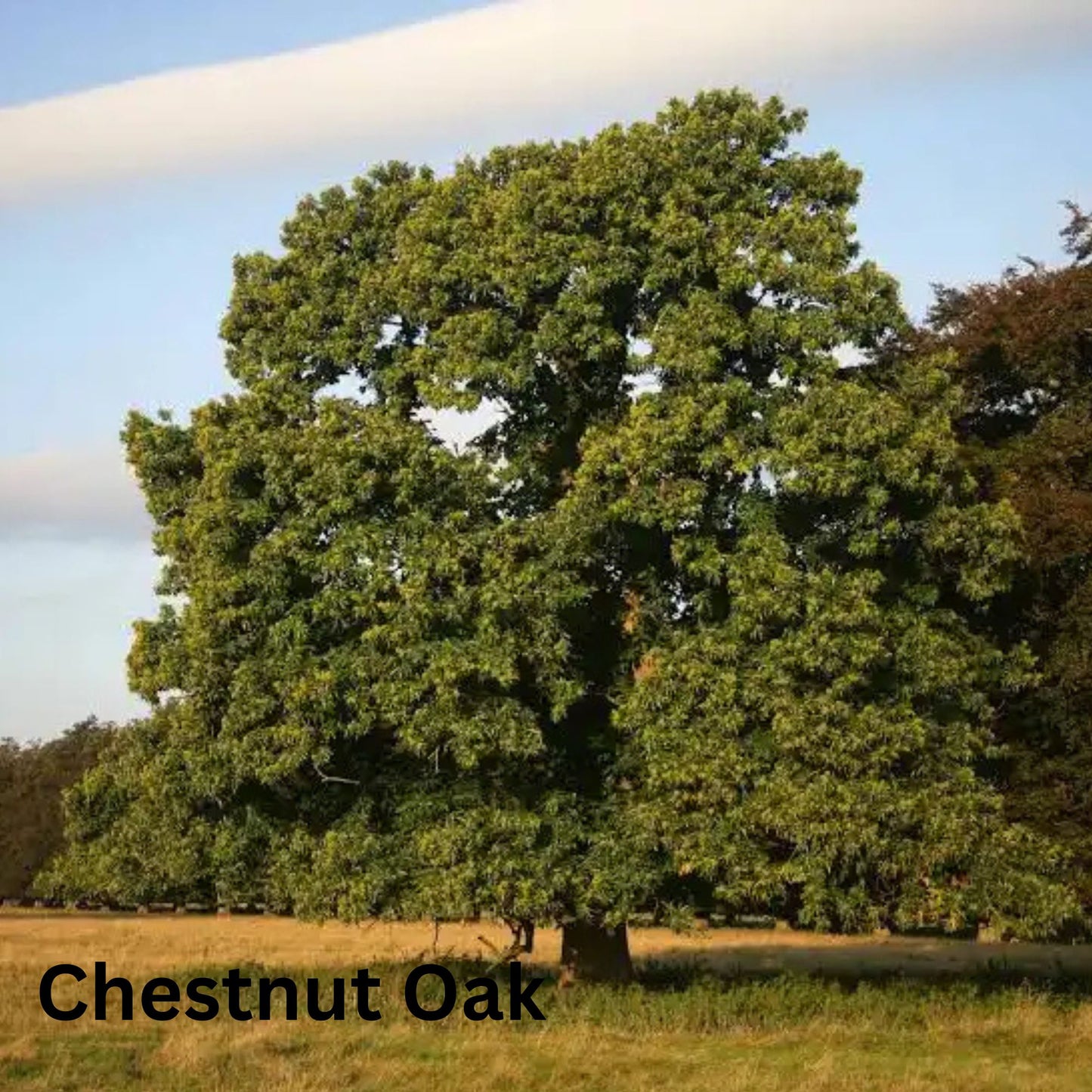
Chestnut Oak
Chestnut oak is found in the Appalachian Mountains and surrounding areas. It is a member of the white oak group. The chestnut oak is a medium-sized tree that typically grows 50 to 80 feet tall and up to two feet in diameter. The wood resembles white oak wood, and the leaves resemble American chestnut, chinkapin oak and swamp chestnut oak. The large acorns are an important wildlife food.
Swamp White Oak
Grows to 50 to 60 feet in height and spread. Has a broad, open rounded crown. Does well in wet, swampy conditions along rivers and streams. Excellent choice for wetland plantings. Fall color is yellow-bronze. Native from Quebec to Georgia, west to Michigan and Arkansas.
Sawtooth Oak
Sawtooth Oak is a rapid-growing tree. It begins to bear in 6 plus years and is a very productive acorn crop that is excellent for deer and wildlife. Bears up to 100 lbs/tree at maturity. It has been widely planted because of its prolific and early bearing for an oak tree. Adapted to a variety of soil conditions. Best performance is achieved in deep, well-drained soils. Best when planted with another oak for nut production. New trees can produce fruit in 6 plus years depending on care and climate. The success of new trees is heavily dependent on the care received during and after planting.
Chinese Chestnut
Growth to 40 to 60 feet with comparable spread. Dense, lustrous foliage gives good shade. Turns yellow to bronze in fall. Grows best in full sun; deep, sandy loam. These dense and round headed ornamental trees, bear large, sweet, delicious edible nuts. Although, self fertile, it is best to plant two or more for best pollination and nut production. Should start bearing nuts in 3 to 5 years. Blight resistant.
American Persimmon
A native tree 25 to 40 feet in height and 20 to 35 feet in width. Common Persimmon is slender with an oval-rounded crown, often very symmetrical. The white, fragrant flowers are very sweet and a favorite of honeybees. An edible persimmon ripens with a deep orange color after several frosts. More than one tree is needed for pollination to produce fruit. Persimmon tends to sucker into groves or colonies, producing food for wildlife. The hard, heavy, close-grained wood is used for golf club heads, billiard cues, and flooring.
Red Osier Dogwood
As habitat managers have become more aware of the importance of woody browse in a deer’s diet, the Red Osier Dogwood has become a popular planting. This brightly colored shrub is widely used to provide both security cover and something for deer to munch on. The twigs of this species are bright red and tender and deer love to browse on them. A popular strategy is planting these shrubs along travel corridors leading from bedding areas to food sources. Deer love having something to snack on as they make their way to main food sources and the cover provided by these shrubs means deer will feel safer and be more likely to move during the day. They also produce white berries in the fall that are a favorite of songbirds, quail, pheasants, and turkeys. Red Osier Dogwoods can reach 5-9ft high and should be planted fairly close together at about 8-12ft between each one to provide cover.
Share